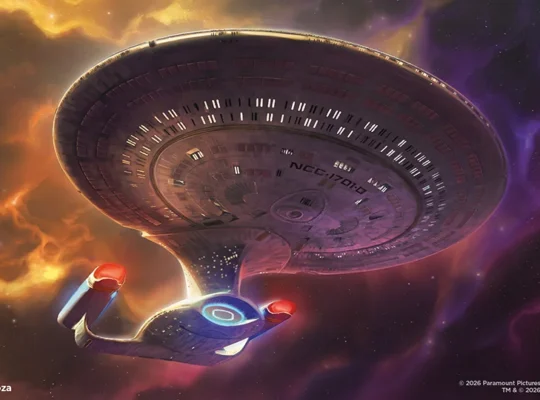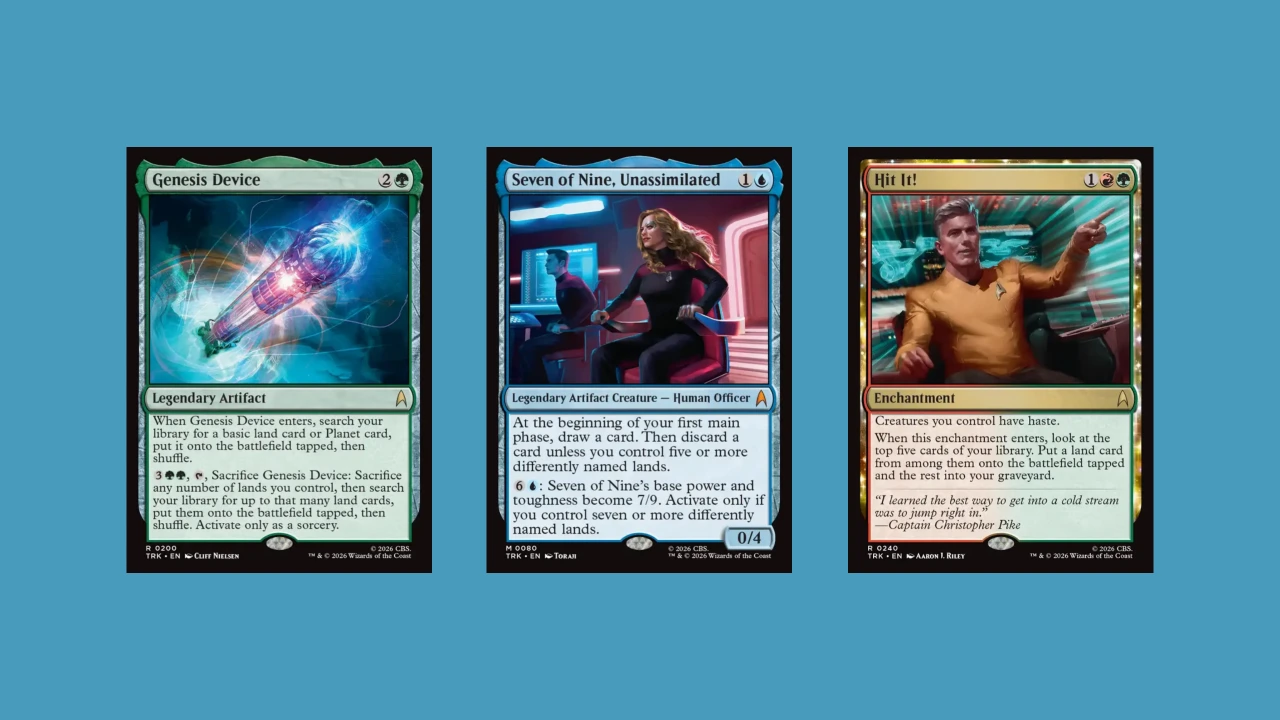
MTG Star Trek does not go on sale until November 13, 2026, but prerelease weekend already put the set in players’ hands, and the price ladder that came out of it is upside down. Scryfall market prices on November 9, 2026 put the set’s priciest standard-frame card, Deep Space 9, at $15.94, while five cards that do the unglamorous work in real decks sit under $4.
Why the cheap cards are cheap
MTG Rocks reported that stores ran MTG Star Trek prerelease events over the weekend of November 7, and that the set landed cheaper than most new Magic releases. Its read is that players may not be connecting with the IP, or that fatigue with release volume is finally biting.
The MTG Star Trek price list tells a simpler story. Buyers paid for names: Captain Jean-Luc Picard at $8.89, Mr. Spock, Science Officer at $7.37, Quark, Humble Proprietor at $5.46, and Deep Space 9 at $15.94. The cards that ramp, tutor, and draw were left on the shelf, and that gap is where the shopping is.
The five that are worth the money
1. Hit It! ($1.28)
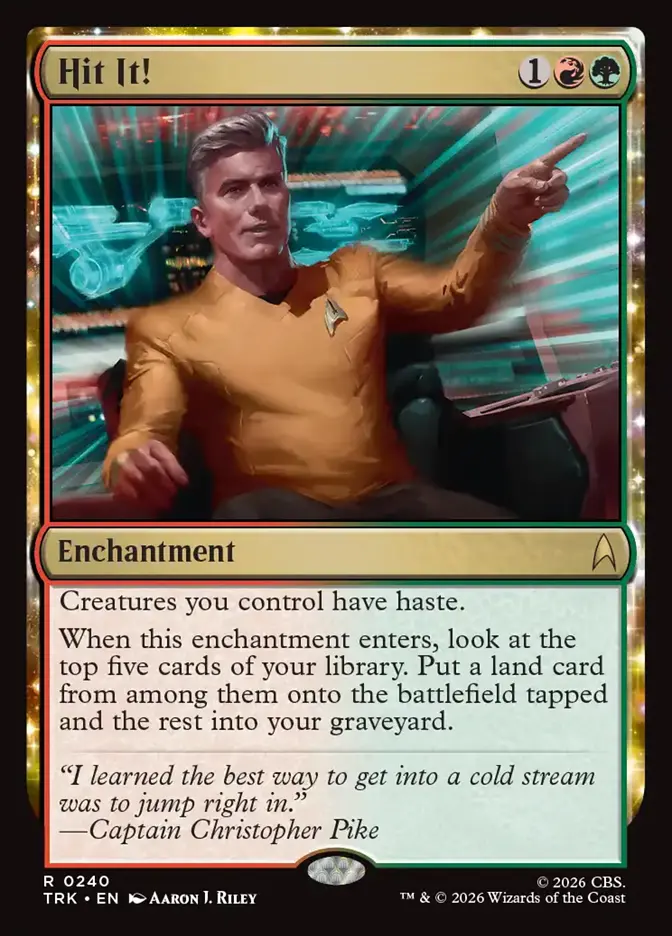
Three mana buys an enchantment that gives every creature you control haste, then reveals the top five cards of your library. A land card among them arrives tapped and the rest go to the graveyard. That is ramp, a finisher enabler, and graveyard fuel in one card, and it is legal from Standard through Commander.
Graveyard decks get a second use out of the mill half, and Gruul lists are already testing it. At $1.28, a three-mana card with that much text looks like the clearest mispricing in the set.
2. Genesis Device ($2.57)
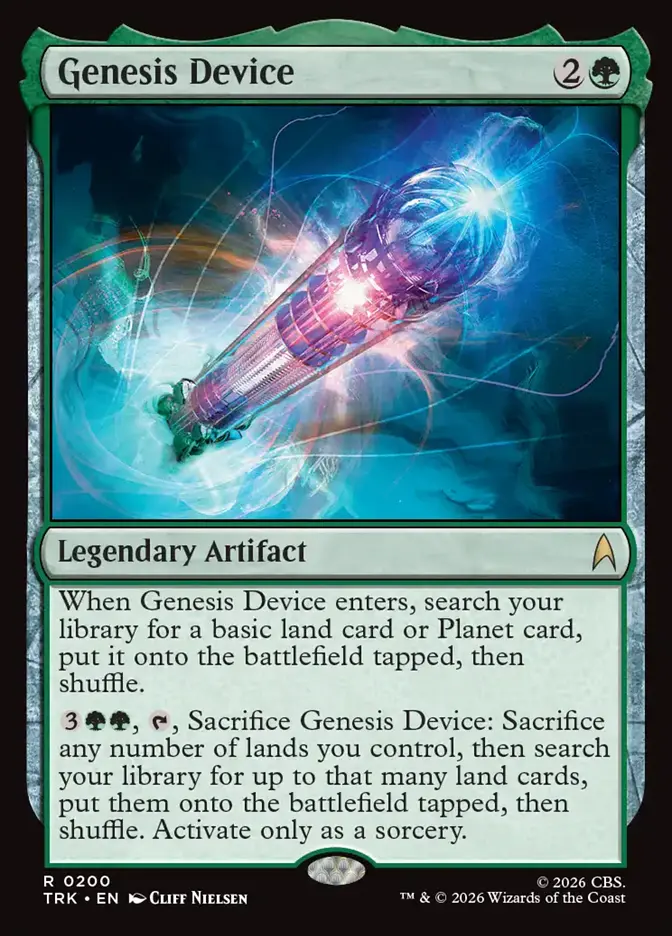
A three-mana legendary artifact that searches up a basic land or Planet card on entry, then converts later. Pay {3}{G}{G}, tap it and sacrifice it, and you sacrifice any number of lands to search up that many more, all entering tapped.
That second half is Scapeshift’s shape, and a second card doing that job is exactly what Scapeshift decks want. The honest accounting is that you pay five mana and a tap for the payoff, so this is not a second Scapeshift at three mana. It is a land tutor that grows into one.
3. Rok-Tahk, Budding Scientist ($1.75)
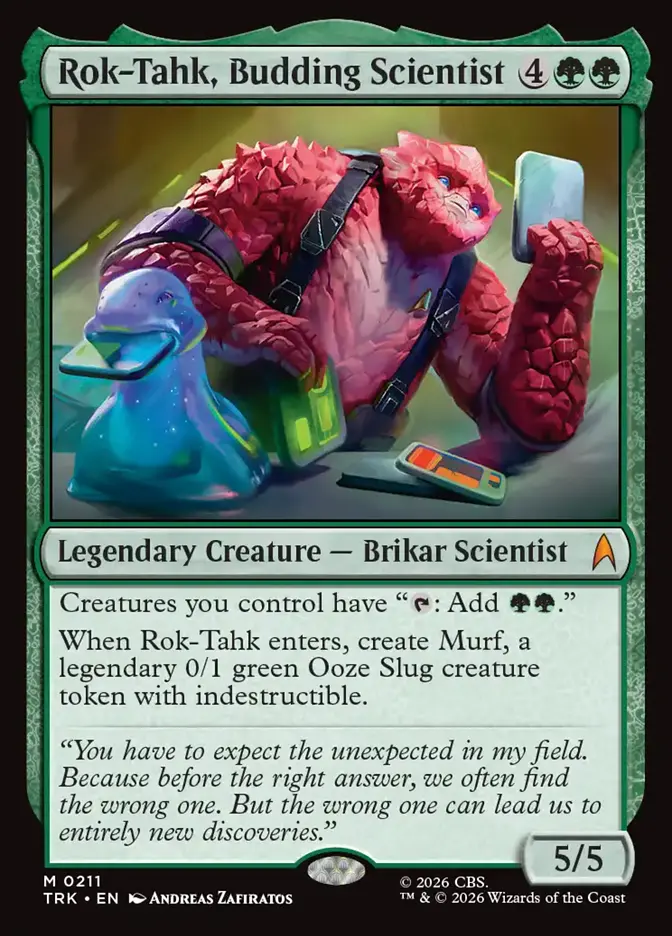
Six mana buys a 5/5 that gives every creature you control “{T}: Add {G}{G}” and creates Murf, a legendary 0/1 green Ooze Slug token with indestructible, on the way in. Rok-Tahk taps for two green by itself, and every token on the board taps for two more.
Cryptolith Rite buys one mana per creature. Doubling that rate is what lets a go-wide board pay for a haymaker in a single turn, and an indestructible token keeps a body around after a board wipe.
4. Seven of Nine, Unassimilated ($3.55)
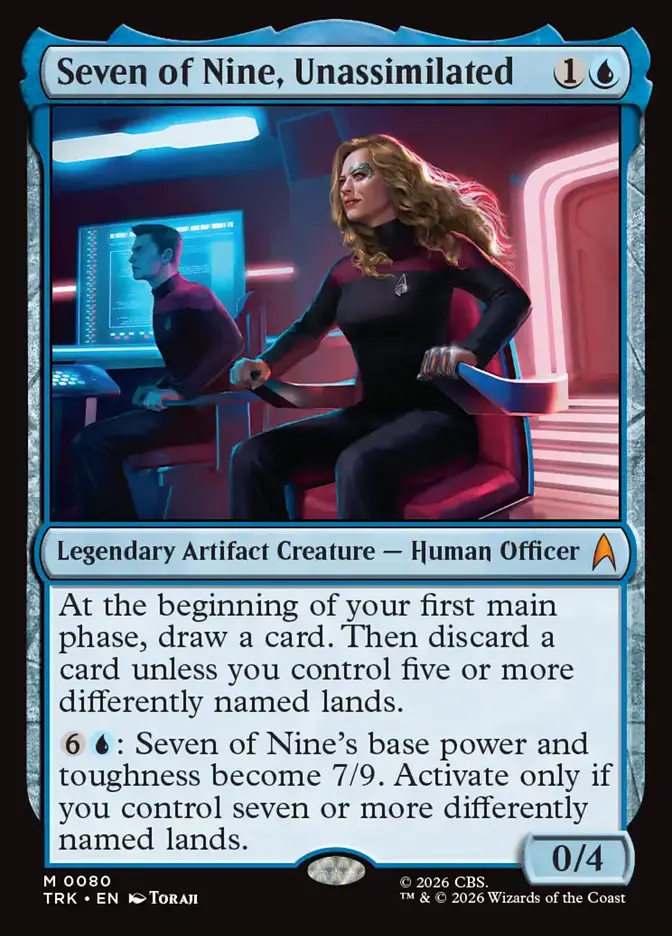
A two-mana 0/4 that draws a card at the beginning of your first main phase, then makes you discard a card unless you control five or more differently named lands. Later, {6}{U} sets her base power and toughness to 7/9 if you control seven or more differently named lands.
This is the one card here that looks correctly priced rather than cheap. Drawing every turn for two mana is strong, but the land condition needs a mana base built for it, and Commander supplies that far more easily than Standard does.
5. Lieutenant Commander Data ($2.68)
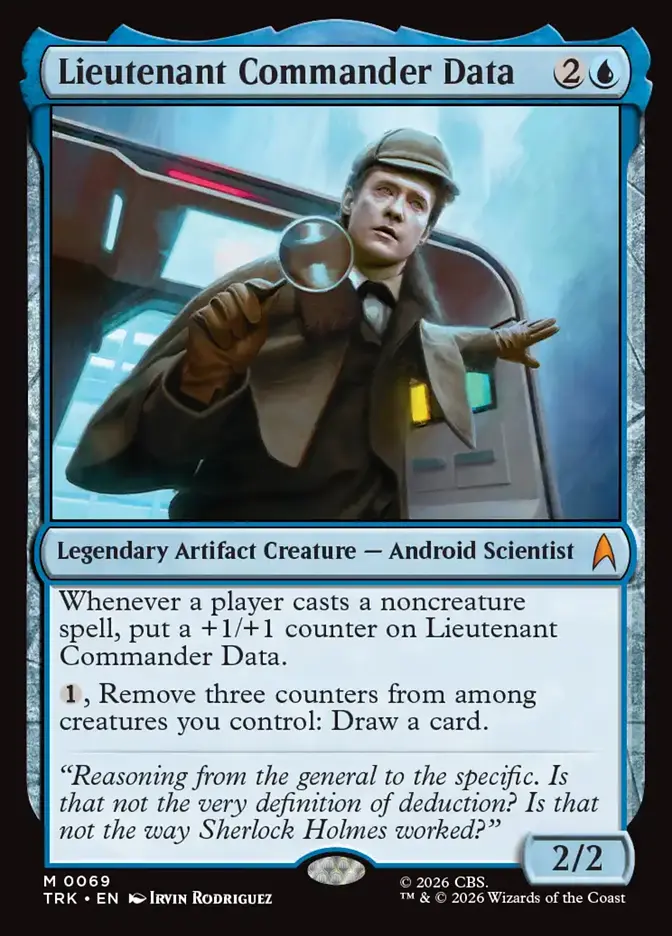
Data takes a +1/+1 counter whenever any player casts a noncreature spell, so opponents grow your creature for you. Once three counters sit on your board, paying {1} and removing them from among creatures you control draws a card.
The counters do not have to come from Data, which makes it a payoff in counter decks. That dependence is also why the price stays low: a payoff without a shell is just a 2/2.
What the money is actually buying
The expensive half of the MTG Star Trek set is names and reprints rather than engines. Deep Space 9 tops the standard-frame ladder at $15.94, the ten shocklands reprinted in the set hold between $4.15 and $7.68, and the surge-foil showcase versions of the marquee characters are a separate market entirely, with Mr. Spock’s surge-foil showcase print listed at $299.98.
The mono-colored rare land cycle that the outlet liked is the other kind of cheap. Those lands enter untapped only from your third land onward and cannot be fetched, so they sit between $0.50 and $1.49, which is about what a non-fetchable mono land should cost. Correctly cheap and mispriced cheap are different things, and only the second belongs on a shopping list.
For cards to play with, the five above cover ramp, lands, draw, and counters for $11.83 together at these prices. For the character you love, buy the character and treat it as a collection purchase.
For more information, visit Scryfall’s Star Trek set page.
Frequently Asked Questions (FAQ)
Q: Which MTG Star Trek card is the cheapest on this list?
A: Hit It!, at $1.28 according to Scryfall market prices on November 9, 2026. Rok-Tahk, Budding Scientist is next at $1.75.
Q: Are these cards legal in Standard?
A: Yes. Star Trek is a Standard-legal expansion that releases on November 13, 2026, after prerelease events on November 7 and 8.
Q: Why is MTG Star Trek cheaper than other recent sets?
A: MTG Rocks puts the soft prices down to prerelease supply and possible player fatigue with release volume. The price list suggests buyers put their money into character cards and reprint lands while the role-players were left alone.
Q: Will these prices go up after release?
A: No one can promise that. Every figure here is a snapshot of Scryfall market prices on November 9, 2026, and the set releases on November 13.
Q: Where do the prices come from?
A: Scryfall market prices fetched on November 9, 2026, for the cheapest available printing of each card. MTG Rocks used TCGplayer figures in the article that inspired this list, which is why a few numbers differ by cents.