

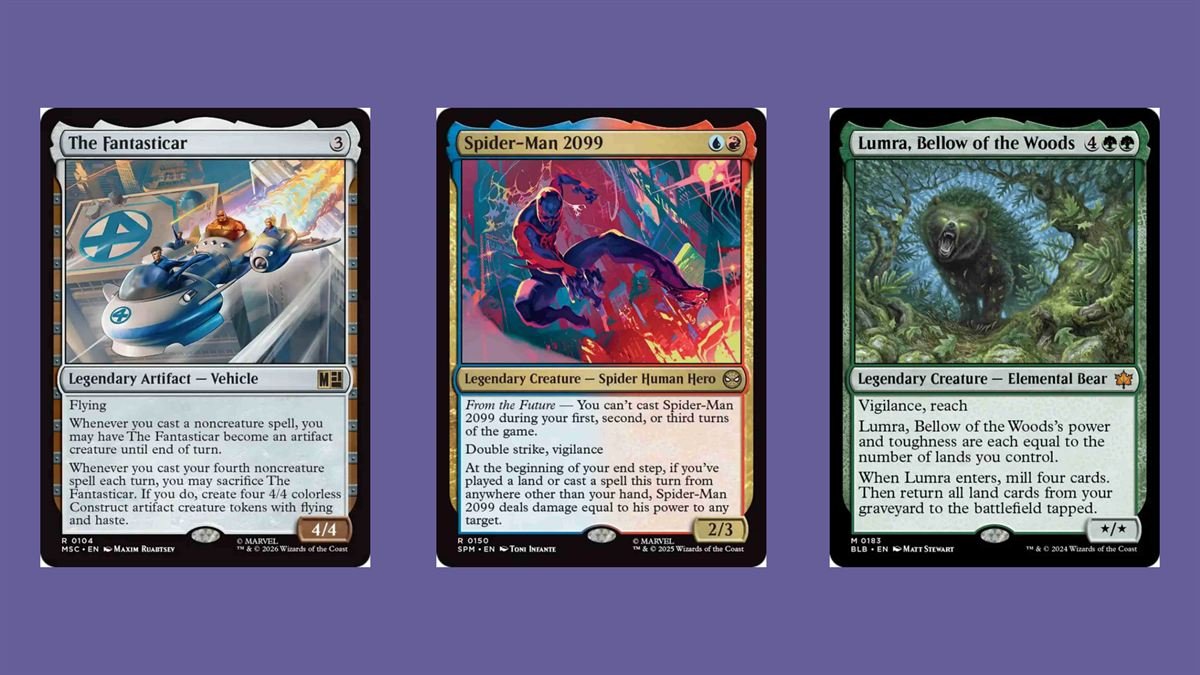
Duel Commander has received a major shakeup after banning three of its most dominant Commanders: The Fantasticar, Spider-Man 2099, and Lumra, Bellow of the Woods. The move is intended to break up a format that had become increasingly repetitive at the top level and create room for a wider range of strategies.
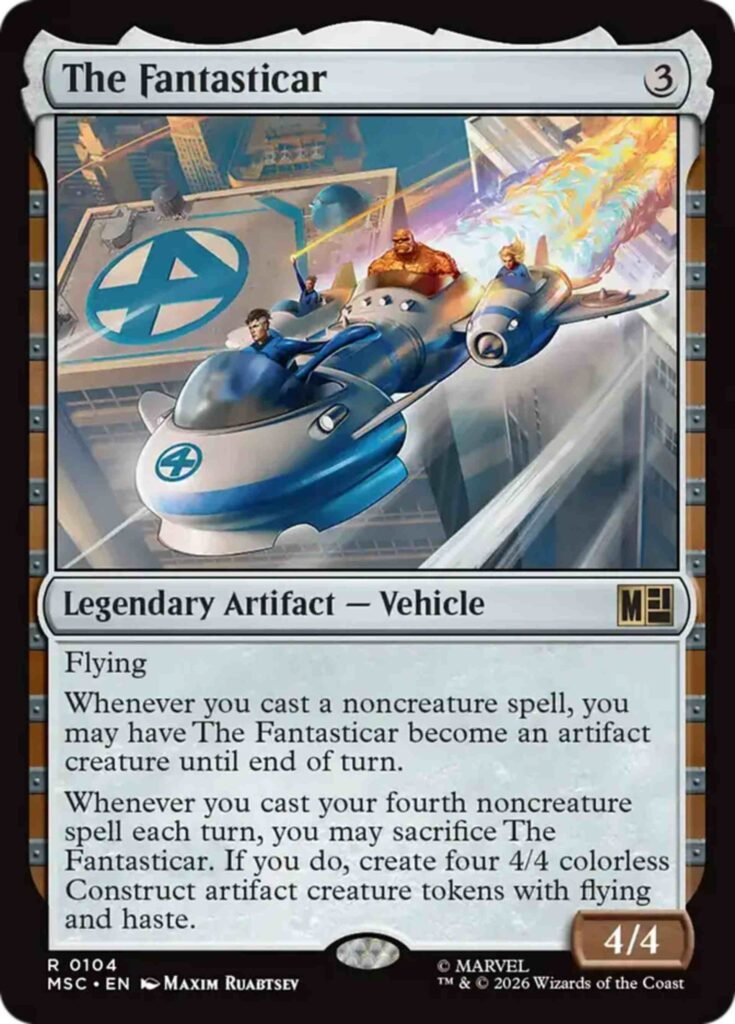
The Fantasticar’s rise was tied to recent Commander rules changes that allowed Legendary Vehicles to be used as Commanders. That gave players guaranteed access to it from the command zone, which in turn made it easy to build around cheap artifacts and produce consistent combo turns. The result was a deck capable of dealing 16 damage as early as turns two or three, often before opponents could establish their own plans.
What made The Fantasticar especially problematic was not just its speed, but how difficult it was to answer cleanly. Because it is not a creature, it demanded very specific interaction to stop the combo. Even when opponents had some relevant answers, the gameplay often still devolved into short, polarizing matches that felt like non-games for one side or the other.
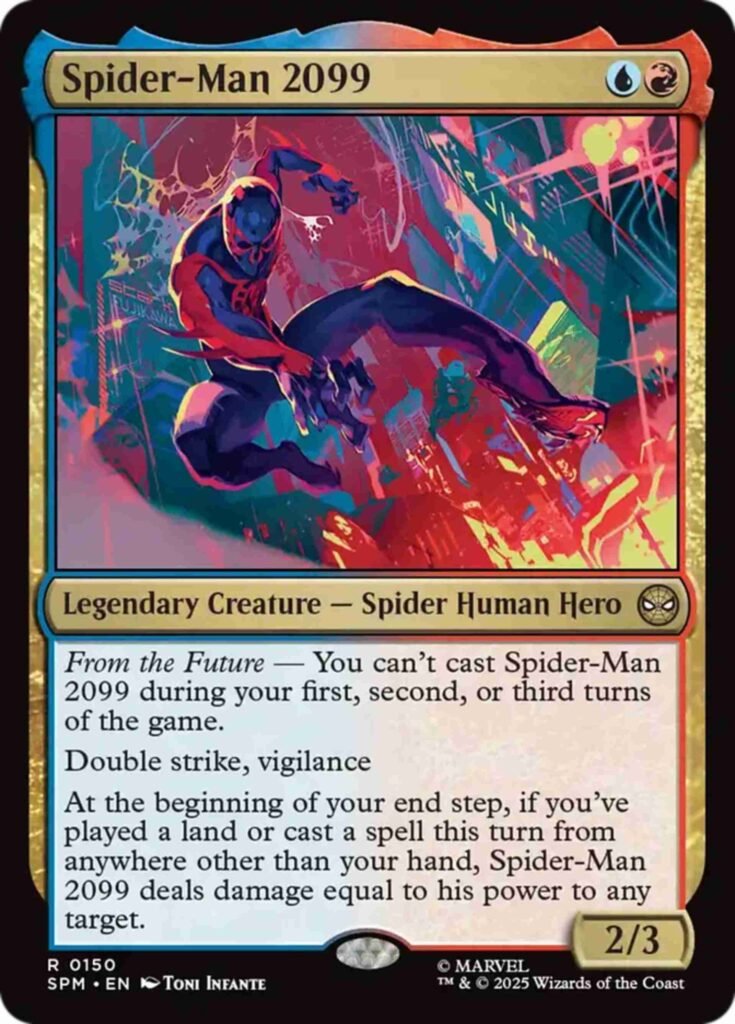
Spider-Man 2099 also became too central to the format. It was winning multiple events every week despite being heavily respected and targeted by other players. The deck was not unbeatable, but it forced opponents to prepare for a large number of instant-speed interactions and a fast rebuild plan in order to keep pace.
That pressure had a wider effect on Duel Commander’s overall diversity. Multiple archetypes were pushed out as players adapted their lists specifically to survive Spider-Man 2099. Over time, the format’s top tables became more homogenous, which helped justify removing the Commander from leadership in the format.
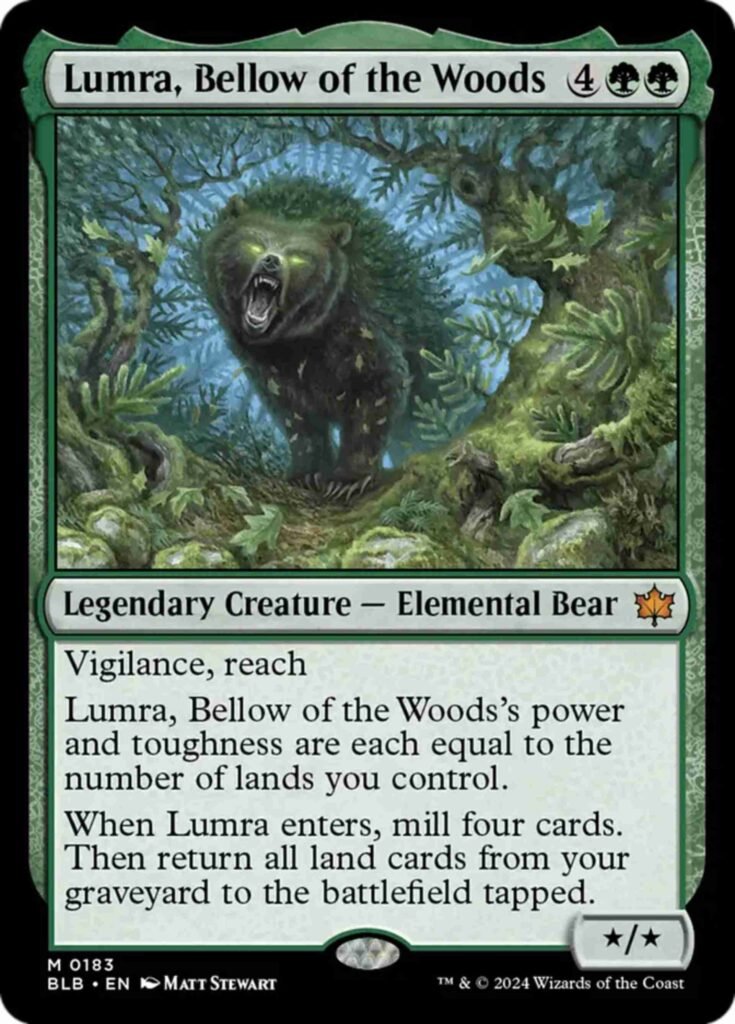
Lumra, Bellow of the Woods followed a different route to dominance, but created similar problems. Its game plan centered on land-based combos that could win quickly while also providing strong late-game resilience through repeated rebuild potential. That made the deck threatening across multiple stages of a game, rather than only during an early explosive turn.
Beating Lumra effectively required a mix of graveyard hate, land hate, and ways to keep it from operating out of the command zone. In a singleton format, assembling all of those answers consistently is difficult. That mismatch between what the deck demanded and what opponents could reliably draw made the ban feel inevitable.
What this means for the Format
The banning of these three Commanders signals a deliberate effort to restore diversity to Duel Commander. Smaller events had already shown signs of innovation, but the format’s biggest tournaments had started to look too similar from week to week. By removing these pillars, the format now has a chance to open up.
For players, the change means more room to test new brews without feeling forced into the same narrow set of answers. It also suggests that future ban announcements could continue to target strategies that create repeated, polarized play patterns. For now, Duel Commander enters a new phase with the hope that its competitive scene becomes healthier and more varied.
Frequently Asked Questions (FAQ)
Q: Which Commanders were banned in Duel Commander?
A: The Fantasticar, Spider-Man 2099, and Lumra, Bellow of the Woods were all banned as Commanders.
Q: Why was The Fantasticar banned in Duel Commander?
A: It enabled very fast artifact-based combo wins from the command zone and often created short, polarizing games.
Q: Why was Spider-Man 2099 banned?
A: It was winning repeatedly and pushing the format toward homogeneity by forcing heavy preparation from opponents.
Q: Why was Lumra, Bellow of the Woods banned?
A: Its land-based combo plan was fast, resilient, and difficult to answer consistently in a singleton format.
Q: What does this ban mean for Duel Commander?
A: It should create more space for diverse strategies and reduce the dominance of a few highly central decks.